
Wrong phone orders: the read-back that saves the remake
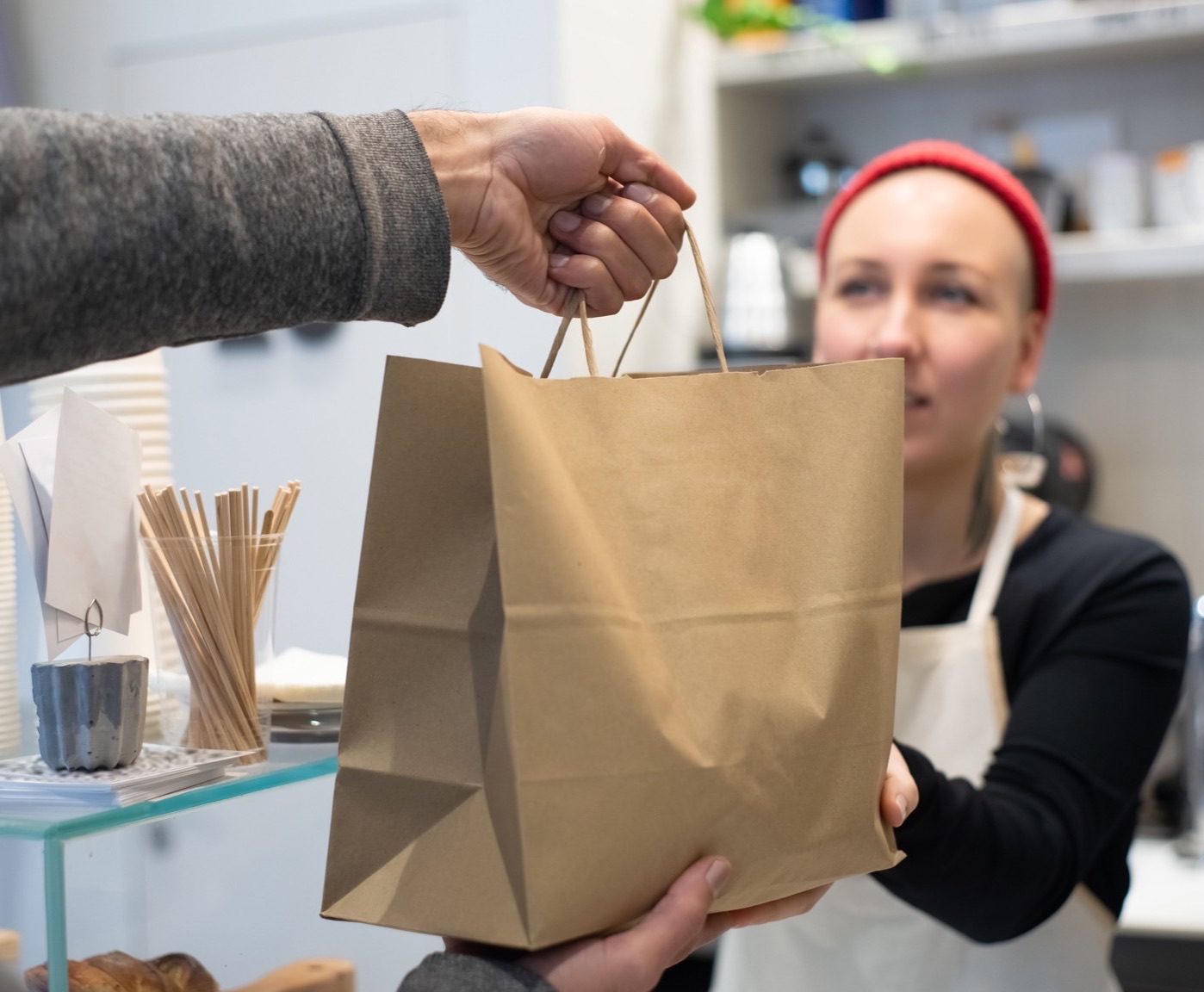
Restaurant order accuracy breaks down on customizations first, and the simplest fix is to read the order back to the caller before you hang up. At US drive-thrus, 43% of wrong orders come down to a customization that wasn't made right (an ingredient left off, an extra, a sauce) [1]. And in fields where a mistake on the phone is costly, the listener repeats the message: in US medical labs, that read-back caught an error on 3.5% of calls, for 12.8 seconds per call [2].
On the phone, your caller has no screen to check: the read-back is their only chance to hear the mistake before it reaches the kitchen. Here's where mistakes come from, why the read-back works, how to do it in a few sentences, what a remake costs and what Soleir does about it.
What causes most restaurant order mistakes?
Customizations, by far. The best-known measure comes from drive-thrus: every year, Intouch Insight and QSR Magazine send mystery shoppers to 13 major US chains with an order set by the study (2,145 visits in June and July 2026) [1]. At the end, one yes-or-no question: was the order filled correctly and completely, including the customization?
In 2026, 10.7% of orders had at least one mistake (89.3% were right, 2.4 points better than in 2025), and 28.4% of shoppers named accuracy the most important factor in a visit, second only to speed [1]. Here's what went wrong on the 229 inaccurate orders [1]:
| What was wrong | Share of wrong orders |
|---|---|
| A customization wasn't made right | 43% |
| A packaged condiment was requested but not given | 13% |
| Wrong main item | 13% |
| Right main item, wrong ingredients | 11% |
Why customizations? On the phone, they're said once, quickly, often mid-order (“the second one, no mushrooms”), then jotted down in shorthand over the noise of service. The name of the pizza rarely goes missing. The “no” and the “extra” are far more fragile.
Why should you read the order back to the caller?
Because it's the last moment the mistake can still be heard. Fields where phone errors are costly adopted the rule long ago: as Joan Barenfanger's team points out, aviation requires pilots to repeat the instructions they get from air traffic control [2].
In a study published in 2004, the team tested the same rule at three US health care organizations: whoever receives a critical lab result by phone has to repeat it. Out of 822 calls, the read-back caught 29 errors (3.5% of calls), for 12.8 seconds per call on average [2]. A lab result isn't a pizza, but the mechanism is the same: the person who receives the information repeats it, and the person who gave it hears right away what's off.
Even big chains don't always do it. At US drive-thrus in 2026, where no board displayed the order, it was read back on only 77.7% of visits; overall, 85.3% of visits got some form of confirmation, board or read-back [1], so nearly 1 in 7 got none. On the phone there's never a board. The read-back is the caller's only check.
How do you read back a phone order without slowing down?
A good read-back takes a few sentences, as long as it always follows the same order:
- Once, at the end. When you have everything: the food, pickup or delivery, the address, the phone number. Reading back as you go and again at the end means doing the job twice.
- Each item with what the caller changed. The “no onions,” the extra cheese, the size, the quantity: that's where mistakes hide. Skip what already comes with the combo.
- In groups for a big order. Pizzas, then sides, then drinks and desserts, with a short pause between groups so the caller can jump in. Nobody listens to a 30-second list read in one breath.
- Pickup or delivery, total, timing. “For pickup, that's $28.40, ready in 20 minutes.” For delivery, the full address, city included.
- A yes-or-no question to finish. “Does that all sound right?” If the caller corrects something, repeat only that line, then the new total.
Two rules around it: suggest the drink or the dessert before the read-back, never after (see why staff stop upselling during the rush), and repeat any allergy word for word, then write it plainly on the ticket (see food allergies and phone orders).
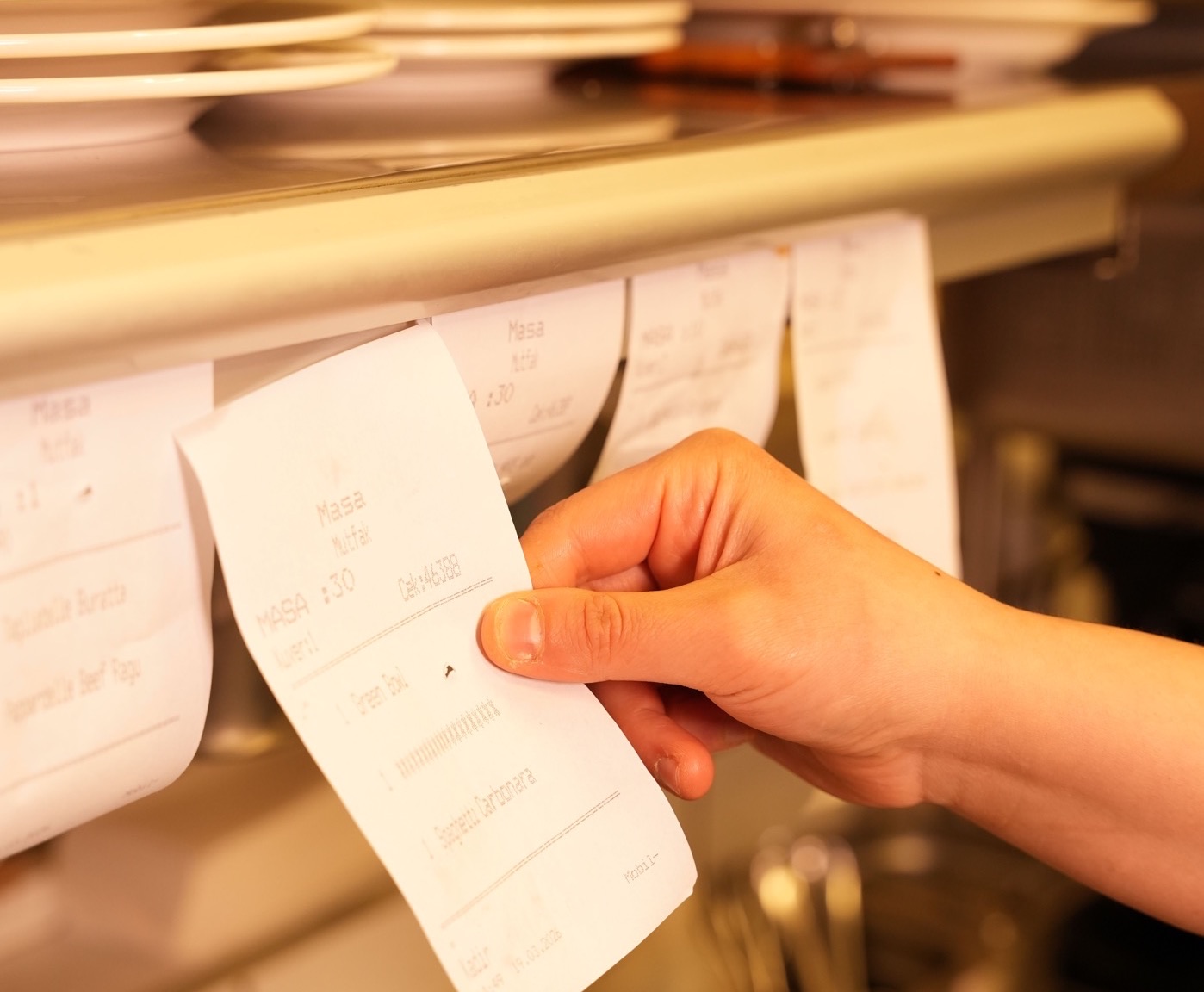
Then the ticket: one line per item, the change right underneath in plain words (“NO ONIONS,” not “x onn”), the size written out. A printed ticket reads better than handwriting scribbled mid-rush. It's the order that Soleir, the AI voice agent that takes your phone orders, follows on every call, and its ticket prints right in your kitchen.
What does a remade order cost you?
A lot more than the read-back. Count for one week (a check mark on the ticket, or a notebook by the oven): remade orders, replaced items, freebies given to make up for a mistake. Then do the math:
Orders remade per month = phone orders per night × error rate × nights open
Here's an example for a pizzeria, with assumptions to replace with your own counts: 30 phone orders a night; 26 nights a month (six nights a week); 1 order in 50 coming back with a mistake. For the order value, take $38, the average takeout and delivery spend US diners reported in TouchBistro's 2025 survey of 1,500 diners, run by The Harris Poll [3]. Result: 30 × 26 = 780 orders a month, 15.6 of them remade, or nearly $600 worth of orders a month that went out wrong.
| Error rate | Orders remade per month | Value of those orders ($38 each) |
|---|---|---|
| 1 in 100 | 7.8 | $296 |
| 1 in 50 | 15.6 | $593 |
| 1 in 20 | 39 | $1,482 |
That's not a straight loss. What you really lose ranges from the cost of remaking the food (plus its spot in the oven mid-rush, and sometimes a second delivery run) to a customer who doesn't come back, along with every order they would have placed.
Against that, the read-back: about 15 seconds per order (a bit more than the 12.8 seconds measured for a lab result [2]), or 7.5 minutes a night and a little over 3 hours a month for 30 orders. Not much, but those minutes come out of your team's service (see how many staff hours phone calls take).
How does Soleir handle order accuracy on the phone?
Soleir is an AI voice agent for restaurants. It answers when your team can't and takes the order from your menu, with options and extras. A “no onions” is noted as a normal instruction; an allergy goes to the kitchen as a prep instruction. Then:
- It reads the order back to the caller, once, at the end: each item with its options, plus what goes wrong most often (an extra, a substitution, a quantity), in groups for a big order. Then pickup or delivery, the verified address for delivery, the total calculated from your menu prices and, for pickup, the time you gave it. If the caller says “no need,” it simply confirms the total.
- The caller corrects a line? Soleir repeats only that line and gives the new total: nobody has to repeat their whole order.
- A detail isn't clear? Live Ticket takes over: Soleir texts the caller the order already filled in, to check and confirm. Once confirmed, it goes through to the restaurant.
- The kitchen gets a printed ticket (items, quantities, extras, special instructions), and the restaurant gets a text and email alert. No one copies the order by hand.
The read-back doesn't depend on who's free: it happens on the first call of the night and on the thirtieth, and Live Ticket catches what's still unclear. To follow an order from the call to the ticket, see never lose an order.
Sources
- Intouch Insight with QSR Magazine, “26th Annual Drive-Thru Study”, 2026. go.intouchinsight.com
- Joan Barenfanger et al., American Journal of Clinical Pathology 121(6), pp. 801-803, “Improving Patient Safety by Repeating (Read-Back) Telephone Reports of Critical Information”, June 2004. pubmed.ncbi.nlm.nih.gov
- TouchBistro, survey by The Harris Poll, “2025 U.S. Diner Trends Report (1,500 US diners, Oct. 15-25, 2024)”, 2025. marketingdev.touchbistro.com
Sources checked on October 20, 2026.
Common Questions
A customization that wasn't made right. In Intouch Insight's 2026 US drive-thru study, 43% of the 229 inaccurate orders came down to a customization, well ahead of a missing condiment (13%) or the wrong main item (13%). On the phone, “no onions” or an extra is said once, quickly, and written in shorthand, which makes it the first thing to read back.
Yes. In a 2004 study at three US health care organizations, having the receiver repeat phoned-in lab results caught an error on 3.5% of 822 calls, for 12.8 seconds per call. It isn't a restaurant, but the logic carries over: your caller has no screen, so the read-back is the only chance to catch a mistake before it reaches the kitchen.
Do it once, at the end, when you have everything. Read each item with what the caller changed (the “no,” the extra, the size, the quantity), in groups for a big order, then pickup or delivery, the total and the timing. Finish with a yes-or-no question. If the caller corrects something, repeat only that line and the new total.
Soleir does: before confirming, it reads the order back to the caller with the options, pickup or delivery, the total calculated from your menu and, for pickup, the time you set. If a detail isn't clear, it texts the caller a Live Ticket, the order already filled in, to check and confirm. Then the ticket prints in your kitchen.
Keep reading
Never Miss Another Restaurant Call
Stay updated with the latest Soleir features restaurant AI insights to your inbox.