
Restaurant phone calls: how many staff hours they eat during the rush
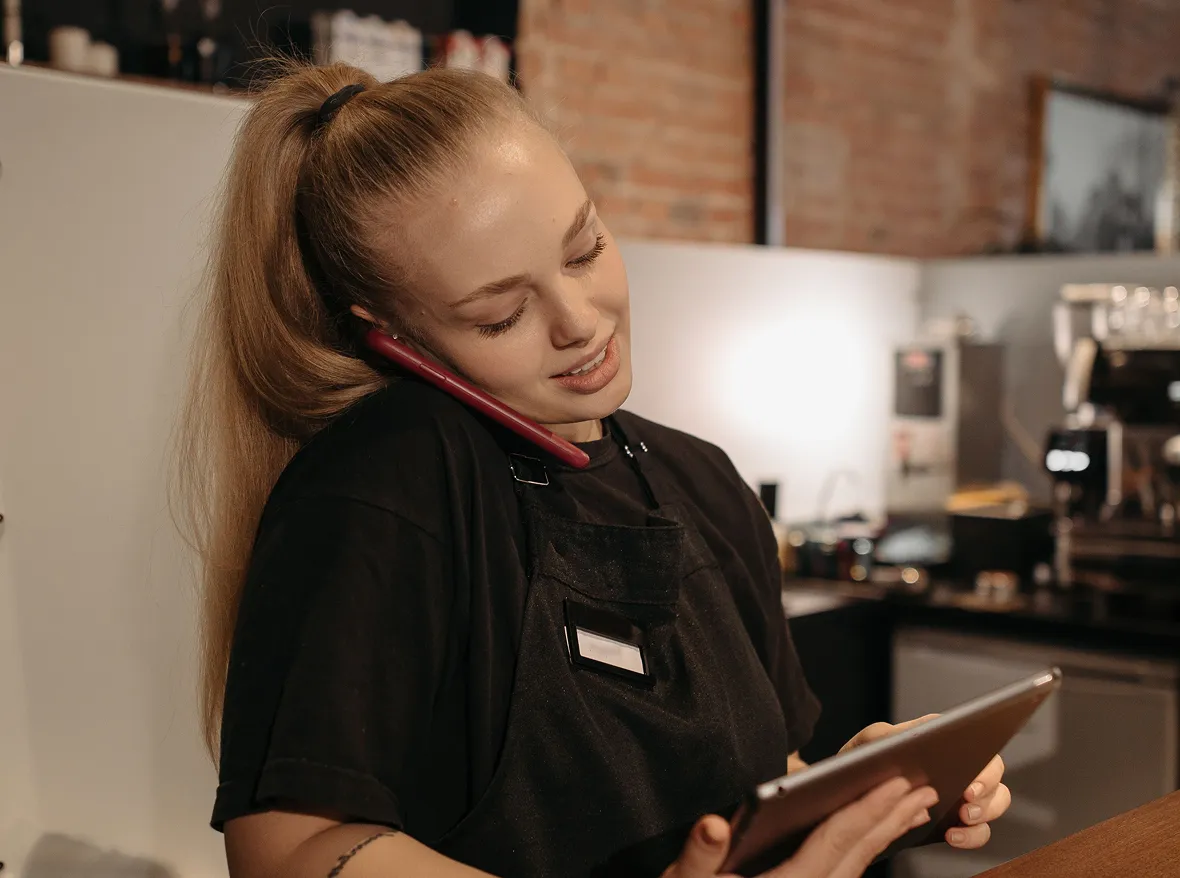
Restaurant phone calls can easily eat dozens of staff hours a month: at 30 calls a day and 2 minutes per call, that is 26 hours over a 26-day month. Those numbers are an example, not an average: work out your own in four steps with the method below.
Those hours weigh more when hiring is hard. The average turnover rate in US restaurants and foodservice was 122% in 2025, and 47% of operators had job openings that were difficult to fill [1]. Every minute on the phone during the rush is a minute taken from the floor or the kitchen. Here is what that time really costs, and how to give it back to service.
How much time does your staff spend on the phone?
We know of no independent measure of the staff time that restaurant phones take. The most reliable number is the one you measure yourself:
- Count a typical day's calls, splitting orders from questions (hours, address, menu). Use your phone system's call log, or tally marks on a sheet by the phone.
- Time about ten calls of each kind. For a full order (items, modifiers, address, total read back), start from 2 to 3 minutes: that is an assumption to check in your restaurant.
- Multiply calls per day × average length × days open per month, then divide by 60 to get hours.
- Put a price on those hours with the hourly wage of whoever picks up.
| Step | Formula | Example (assumptions) |
|---|---|---|
| Orders | calls × length | 20 × 2.5 min = 50 min |
| Questions | calls × length | 10 × 1 min = 10 min |
| Per day | orders + questions | 60 min |
| Per month | × days open ÷ 60 | 60 × 26 ÷ 60 = 26 hours |
| Wage cost | × hourly wage | 26 × $15.00 = $390 |
The example uses $15.00 an hour, the May 2025 median wage for restaurant hosts and for fast food and counter workers [2]. It counts wages only: use your real rate, and add payroll taxes and benefits if you know them. Over a year, the example adds up to 312 hours, close to eight 40-hour weeks.
For comparison, two voice AI vendors publish averages: 1,220 calls a month per restaurant for Slang AI, which does not explain its method [5], and 1 minute 45 seconds per call for Maple, across 1.2 million calls its voice AI handled at more than 1,000 customer locations in the US [3]. Combined, that is about 36 hours of conversation a month, or about $534 at $15.00 an hour: an estimate from vendor data on reservation-heavy restaurants, so trust your own count first.
Why does a phone call cost more during the rush?
The calculation counts minutes of conversation, not when they land. In Maple's data, 68% of calls come in during the lunch rush (11 a.m. to 2 p.m.) and the dinner rush (5 to 9 p.m.) [3]. If your call log shows the same peaks, the phone rings when the dining room is full and the oven is loaded. A call at that moment means:
- A task interrupted. A server leaves a table mid-order, a pizza maker wipes their hands to pick up. The time it takes to get back into the flow never shows up on a stopwatch.
- A guest on hold. In the full-service restaurants studied by Revmo, another voice AI vendor, callers who are asked to wait hold for 73 seconds on average [4].
- An order taken on the fly. A size misheard, a modifier forgotten, a house number written down wrong: you pay for it later, in a remade dish or a driver going in circles.
- A sale left on the table. Rushed staff stick to the basics. In the pizza restaurants in the same study, only 28.6% of calls included an upsell attempt [4].
None of these losses has a reliable industry number. To see yours, log phone-order mistakes (remakes, corrected deliveries, comps) and unanswered rush-hour calls for two weeks. To put a dollar figure on those missed calls, see our guide to the cost of missed restaurant calls.
Restaurant labor shortage in 2026: where do things stand?
Hiring has gotten easier, but it is not easy. In the National Restaurant Association's April 2026 report on hiring and staffing, 47% of operators said they had job openings that were difficult to fill in 2025, down from 59% in 2024 and a peak of 79% in 2022 [1].
Turnover keeps the pressure on. The industry's average turnover rate was 122% in 2025, meaning more separations over the year than jobs, according to Lightcast analysis of Bureau of Labor Statistics data [1]. It reached 131% for waiters and waitresses and nearly 293% for hosts and hostesses [1]. And among operators without enough employees to meet demand, 48% could not operate at full capacity in 2025 [1].
The link with the phone is direct. When hiring is hard, every hour the phone takes is an hour missing from the floor or the line. And every new hire has to learn the menu, the modifiers and the delivery zone before taking phone orders without mistakes.
Which restaurant calls can you avoid without losing customers?
Not every call needs someone from your team. In Maple's data, 22% of calls are about hours, location or directions and 15% are menu questions, compared with 12% for takeout and delivery orders and 38% for reservations [3]. A takeout-heavy pizza shop will have its own mix, so sort your own calls. Still, in that data, more than one call in three asks for information that could live somewhere else:
- Your Google Business Profile: current hours (holidays and closures included), address, a link to the menu, your delivery area.
- Your website or online ordering page: the full menu with prices, add-ons and allergens.
- Your phone greeting: one short sentence with your hours and website, before anyone picks up.
This will not silence the phone, but it takes a share of the calls off your team. Orders still need to be taken, and that is where organization matters.
How do you free your team from the phone during the rush?
This is not about replacing anyone. It is about giving the floor and the kitchen back the time the phone takes from them. Three options to combine, depending on your volume:
One person answering the phone during the rush
When the phone rings most, one person answers, with the menu and the delivery zone in front of them, and everyone else stops picking up. It is the simplest fix when volume justifies it, but it is a shift to schedule just when you are short-handed.
Call forwarding
When the dining room is slammed, forwarding calls to another line (a partner, a second location, an answering service) beats letting the phone ring, as long as whoever answers knows your menu and can get the order to your kitchen.
A voice agent for the calls your team can't take
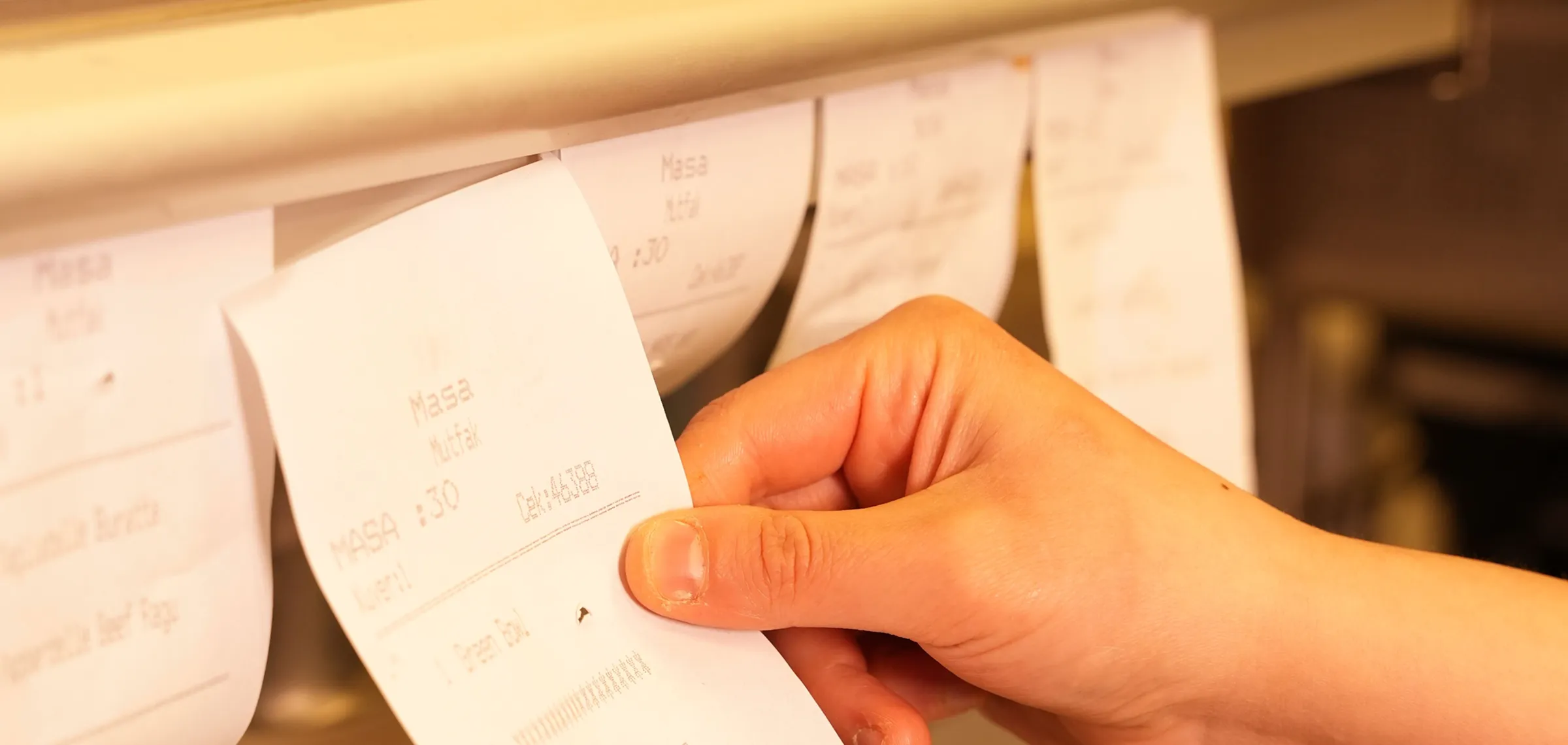
An AI voice agent picks up when no one is free, takes the order (items, modifiers, pickup or delivery) and sends it to the restaurant, for example to the kitchen printer. That is what Soleir does, and it says it is an AI at the start of every call. On how to present that kind of agent to your guests, read our guide to AI voice agent transparency.
Whatever you choose, redo the calculation a month later to check that the time really went back to service.
Sources
- National Restaurant Association, “Research Insight: Hiring & Staffing. How Onboarding, Managers, & Technology Drive Restaurant ROI”, April 2026. go.restaurant.org
- U.S. Bureau of Labor Statistics, “Occupational Outlook Handbook: Food and Beverage Serving and Related Workers (wages as of May 2025)”, 2026. bls.gov
- Maple (voice AI vendor), “The State of Restaurant Phone Communication: Insights from 1 Million+ Calls”, December 7, 2025. maple.inc
- Revmo (voice AI vendor), “State of Restaurant Calls 2026 (press release)”, August 6, 2026. revmo.ai
- Slang AI (voice AI vendor), “Slang AI's State of the Restaurant Phone: How Operators Can Uncover Hidden Revenue”, Undated (accessed October 1, 2026). slang.ai
Sources checked on October 1, 2026.
Common Questions
There is no public benchmark for order calls alone. Across 1.2 million calls of all kinds answered by its voice AI, the vendor Maple measured an average of 1 minute 45 seconds. A full order, with modifiers, the address and the total read back, involves more back-and-forth than a question about hours: start from 2 to 3 minutes as an assumption, then time about ten of your own calls.
Count a typical day's calls and time about ten of them to get an average length. Multiply calls per day by that length and by the days you are open each month, then divide by 60. For example, 30 calls of 2 minutes over 26 days make 26 hours a month, or $390 in wages at $15.00 an hour, the May 2025 median for restaurant hosts.
According to the National Restaurant Association's 2026 hiring and staffing report, the average turnover rate in restaurants and foodservice was 122% in 2025, based on Lightcast analysis of Bureau of Labor Statistics data: more separations over the year than jobs. It varies widely by role, from about 85% for restaurant cooks to 131% for waiters and waitresses and nearly 293% for hosts and hostesses.
No. A voice agent takes the calls your team can't, such as takeout and delivery orders during the rush, and sends them to the restaurant. Service on the floor, greeting guests, cooking and special requests stay with your team. The point is to give your staff time back for service, not to cut a position. A trustworthy agent also says it is an AI at the start of the call.
Keep reading


Never Miss Another Restaurant Call
Stay updated with the latest Soleir features restaurant AI insights to your inbox.