
Answering the phone mid-rush: what your caller actually hears
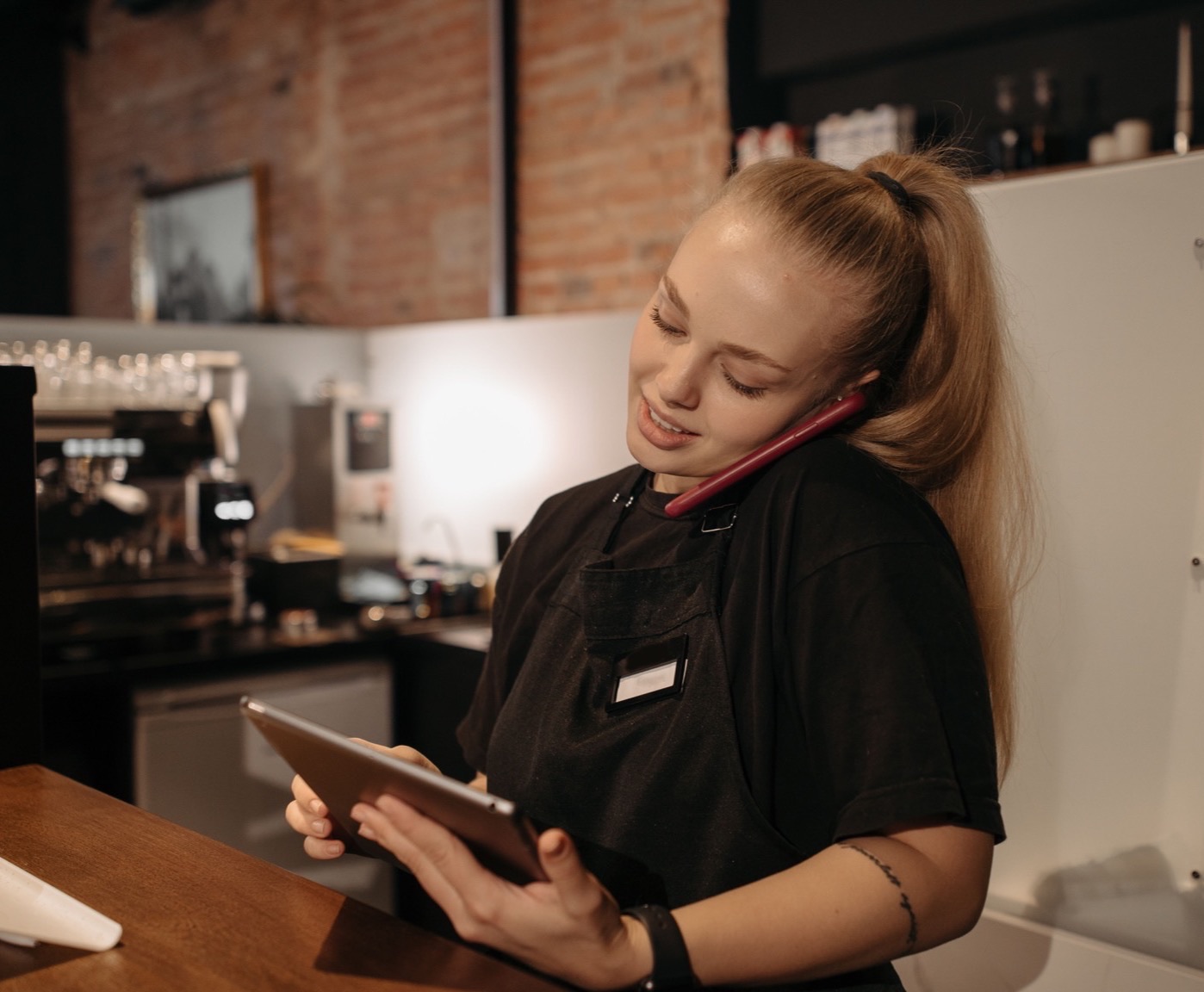
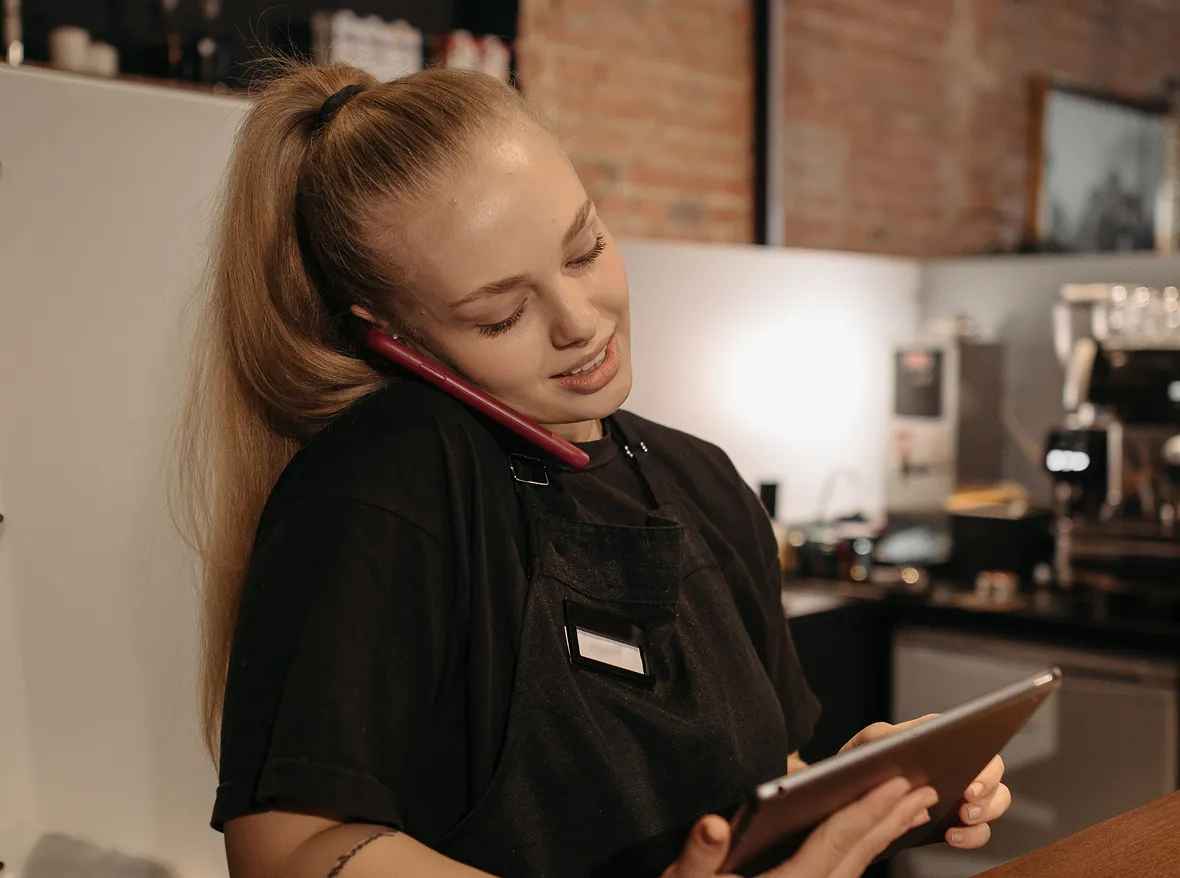
When you answer the phone at a restaurant mid-rush, your caller hears everything your team is going through: the long ring, the “hold on,” the rushed voice, the hood fan in the background. In 12,091 recorded restaurant calls analyzed by Revmo, a US voice AI company, fast casual restaurants opened only 60.6% of calls with a proper greeting [2], and that share dropped 38 points at dinner [1].
Your caller can't see the packed counter or the full oven: all they have is your voice. Here's what callers pick up on, a simple way to answer, how to put someone on hold without losing them, and who picks up when nobody can.
What does a caller hear when you're slammed?
Rarely one wrong sentence. More often small signals, picked up without seeing the room:
- The wait. The phone rings and rings, then a “hold on” before they've said a word.
- The tone. A curt “Hello?” instead of the restaurant's name, one-word answers.
- The noise. The hood fan, the fryer, an order shouted across the kitchen in the middle of theirs.
- The distraction. They repeat their address while you talk to someone else.
It isn't just a feeling. In Revmo's recordings, fast casual callers wait 31% longer at dinner than at lunch, and according to the company, every metric slips at once when demand peaks [1]. It's data published by a vendor, but the mechanism is familiar: during the rush, the guest at the counter comes first.
Callers notice. In a 2025 Ipsos bva survey in five European countries (all industries, not just restaurants), 47% to 52% of people who had dealt with a customer service agent by phone had felt the agent was stressed or rushed, depending on the country, and 84% to 89% of them said it hurt the exchange [6]. Those agents only had the phone to handle. Whoever answers yours also has the oven and the register.
Can callers really hear stress in your voice?
Yes, and fast. On the phone, the voice is all your caller has to go on. Two studies from other fields show how little it takes.
In the US, raters listened to 10-second clips of surgeons talking with patients, some filtered so only the tone came through, not the words. Surgeons whose tone was rated more dominant and less concerned were more likely to be the ones with past malpractice claims [3]. In England, eight people repeated the same sentence, smiling or not: from the voice alone, listeners could tell different kinds of smiles apart [5].
A pizza order isn't a doctor's visit, but the lesson holds: the right words in a rushed tone don't reassure anyone, a smile comes through in your voice, and tone is judged within seconds. It's also what people say they want: in France, 69% of respondents put careful listening, kindness and empathy among the top three qualities they value in a customer service agent [6].
How do you answer the phone at a restaurant?
With a short routine, the same for everyone on your team:
- Answer with the restaurant's name. “Bella Pizza, good evening!” The caller knows they've reached the right place.
- Step away from the noise. Two steps from the hood, the phone at your ear rather than pinned against your shoulder: every time a caller repeats, you both lose time.
- Ask pickup or delivery first. For delivery, get the address right away: no point writing down three pizzas for a street outside your zone.
- Let the caller get through their order, then ask for what's missing: size, sauce, extras.
- Suggest a drink or a dessert, once, before the read-back (see why staff stop upselling during the rush).
- Read the order back with the total and the time (here's the read-back that saves the remake).
- End with a time. “It'll be ready at 8:15. Thanks, see you soon!” Not “it'll be a bit.”
The hard part is saying these lines the same way at 8 pm on a Friday. A few swaps help:
| Instead of… | Try… |
|---|---|
| “Hello?” | “Bella Pizza, good evening!” |
| “Hold on” (then music) | “I'm just finishing with a customer, I'll be with you in a minute. Is that OK?” |
| “Yeah, yeah, go ahead…” while serving someone else | “Go ahead, I'm listening.” And really listen, pen in hand. |
| “It'll be a bit.” | “It'll be ready at 8:15.” |
Soleir, the AI voice agent that takes your phone orders, follows the same outline on every call: your restaurant's name when it picks up, the order from your menu, the read-back, the pickup time.
How do you put a caller on hold without losing them?
Sometimes you have to: someone is paying at the counter, a pizza is coming out of the oven. What matters then is what the caller hears while they wait.
Researchers at the Technion, in Israel, compared three ways to fill a phone wait: music, apologies, or telling callers their place in the queue. On 123 real calls, callers who were told their place hung up the least and rated their call the best. In a second experiment, what made the difference was the sense of moving forward, more than how long the wait felt [4].
In a restaurant, that means four rules:
- Ask before you put someone on hold, and wait for the answer: “Can you hold for a minute?”
- Give them a marker. “I'm finishing with one customer, you're next.”
- Come back before the time you gave, even just to say “thirty more seconds.”
- Mute the phone. Left on the counter, it lets everything through: shouted orders, kitchen arguments.
If callers wait every single night, it's no longer about manners: you're short one person on the phone.
Who answers the phone when the whole team is busy?
Mid-rush, good habits aren't always enough: someone needs a free hand.
- Someone on the phone at peak hours. The safest option, but it's extra hours just when every pair of hands counts (see how much staff time phone calls take).
- Call forwarding to another number, if the person on the other end knows your menu.
- Voicemail. It gives your hours, but it doesn't take a single order.
- An AI voice agent. It answers when nobody can, takes the order and sends it to the kitchen: that's Soleir's 24/7 phone answering.
What does Soleir do when nobody can pick up?
Soleir is an AI voice agent for pizzerias, sandwich shops and quick-service restaurants. It answers when your team can't, with your restaurant's name. With no oven to watch and no line at the counter, it greets the thirtieth caller of the night the same way as the first. In practice:
- it takes takeout and delivery orders from your menu, with options and extras;
- for delivery, it checks the address and the zone before confirming;
- it can suggest a drink or a dessert, once, if you want it to (it's set restaurant by restaurant);
- it reads the order back to the caller, with the total and, for pickup, the time you gave it;
- if a detail isn't clear, it texts the caller a Live Ticket: the order already filled in, to check and confirm;
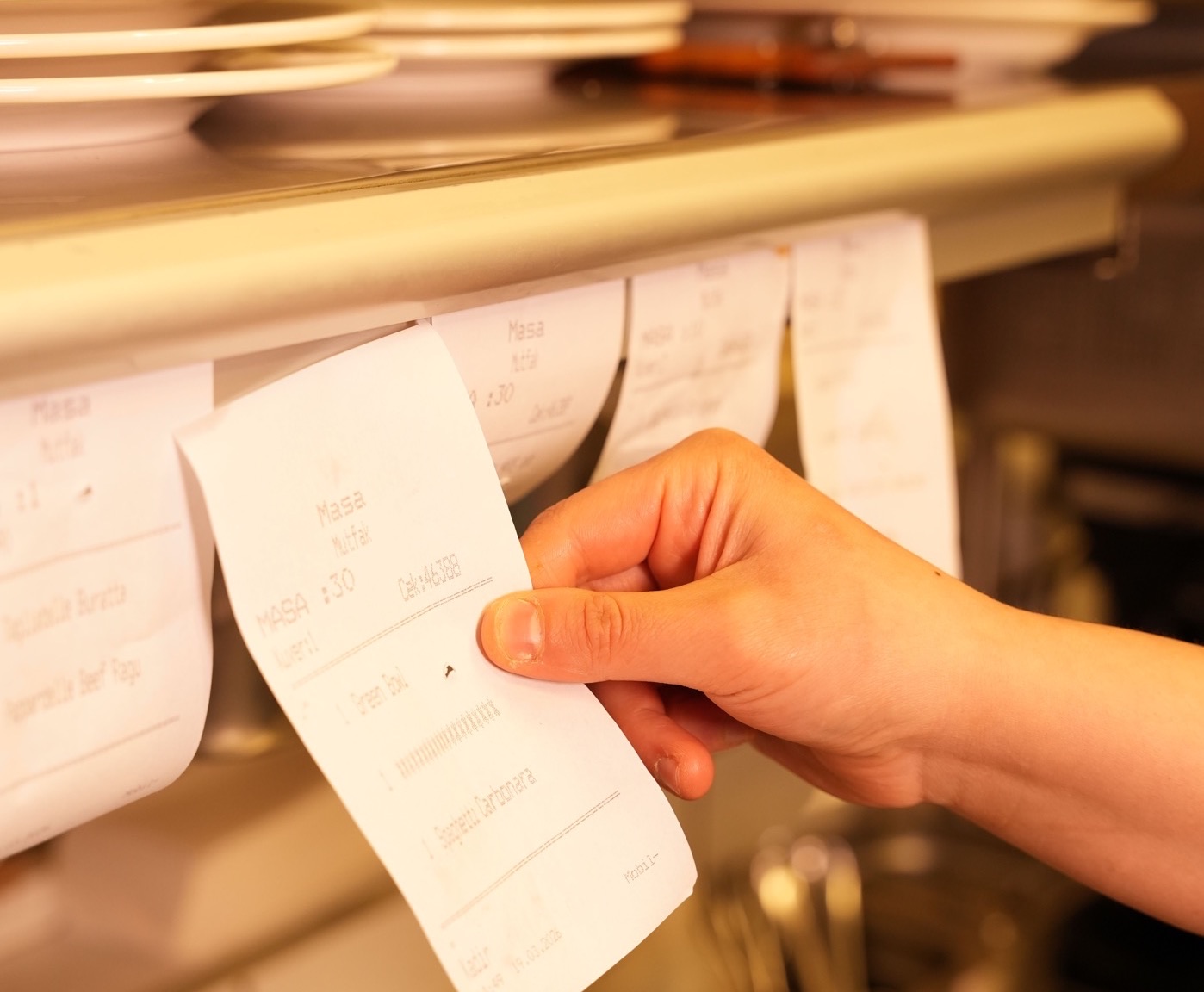
- the order reaches the restaurant: a ticket printed in the kitchen, plus a text and an email alert;
- it answers customers' questions (hours, address, menu), 24/7;
- no commission on your orders.
Coming soon: recognizing your regulars, taking table reservations and connecting to your POS.
Your team keeps the oven and the counter, and your caller hears a restaurant that has time to listen. From the call to the ticket: never lose an order.
Sources
- Revmo (US voice AI company), “New Industry Report Reveals Restaurants Lose Billions Annually from Missed Calls and Weak Phone Operations (State of Restaurant Calls 2026, 12,091 call recordings)”, August 6, 2026. revmo.ai
- Revmo (US voice AI company), “State of Calls Report 2026: Restaurant Phones (report page)”, 2026. revmo.ai
- Nalini Ambady et al., Surgery 132(1), pp. 5-9, “Surgeons' tone of voice: a clue to malpractice history”, July 2002. pubmed.ncbi.nlm.nih.gov
- Nira Munichor and Anat Rafaeli (Technion), Journal of Applied Psychology 92(2), pp. 511-518, “Numbers or apologies? Customer reactions to telephone waiting time fillers”, March 2007. pubmed.ncbi.nlm.nih.gov
- Amy Drahota, Alan Costall and Vasudevi Reddy, Speech Communication 50(4), pp. 278-287, “The vocal communication of different kinds of smile”, April 2008. researchportal.port.ac.uk
- Ipsos bva for the Élection du Service Client de l'Année, “Observatoire des services clients 2025 (in French; 1,000 people per country in France, Germany, Italy, Spain and the UK)”, November 2025. escda.fr
Sources checked on October 20, 2026.
Common Questions
Pick up with the restaurant's name, away from the kitchen noise. Ask pickup or delivery first, and get the address for delivery. Let the caller finish, ask for what's missing, suggest a drink or a dessert once, read the order back with the total, then give a specific ready time before thanking them.
Ask first and wait for the answer. Give a marker (“you're next”), come back before the time you gave, and mute the phone while they wait. In a Technion study of 123 real calls, callers told their place in the queue hung up less often than callers who heard music or apologies.
Yes. In a 2025 Ipsos bva survey in five European countries, about half of the people who had dealt with a phone agent had felt them stressed or rushed, and most of them said it hurt the exchange. Voice research shows that tone is judged within seconds, and that a smile can be heard.
A dedicated person at peak hours, call forwarding to someone who knows your menu, or an AI voice agent. Soleir answers when your team can't, takes the order from your menu, reads it back to the caller and sends it to the kitchen as a printed ticket, with a text and an email alert.
Keep reading
Never Miss Another Restaurant Call
Stay updated with the latest Soleir features restaurant AI insights to your inbox.