
Restaurant technology: the table, the counter… and the phone
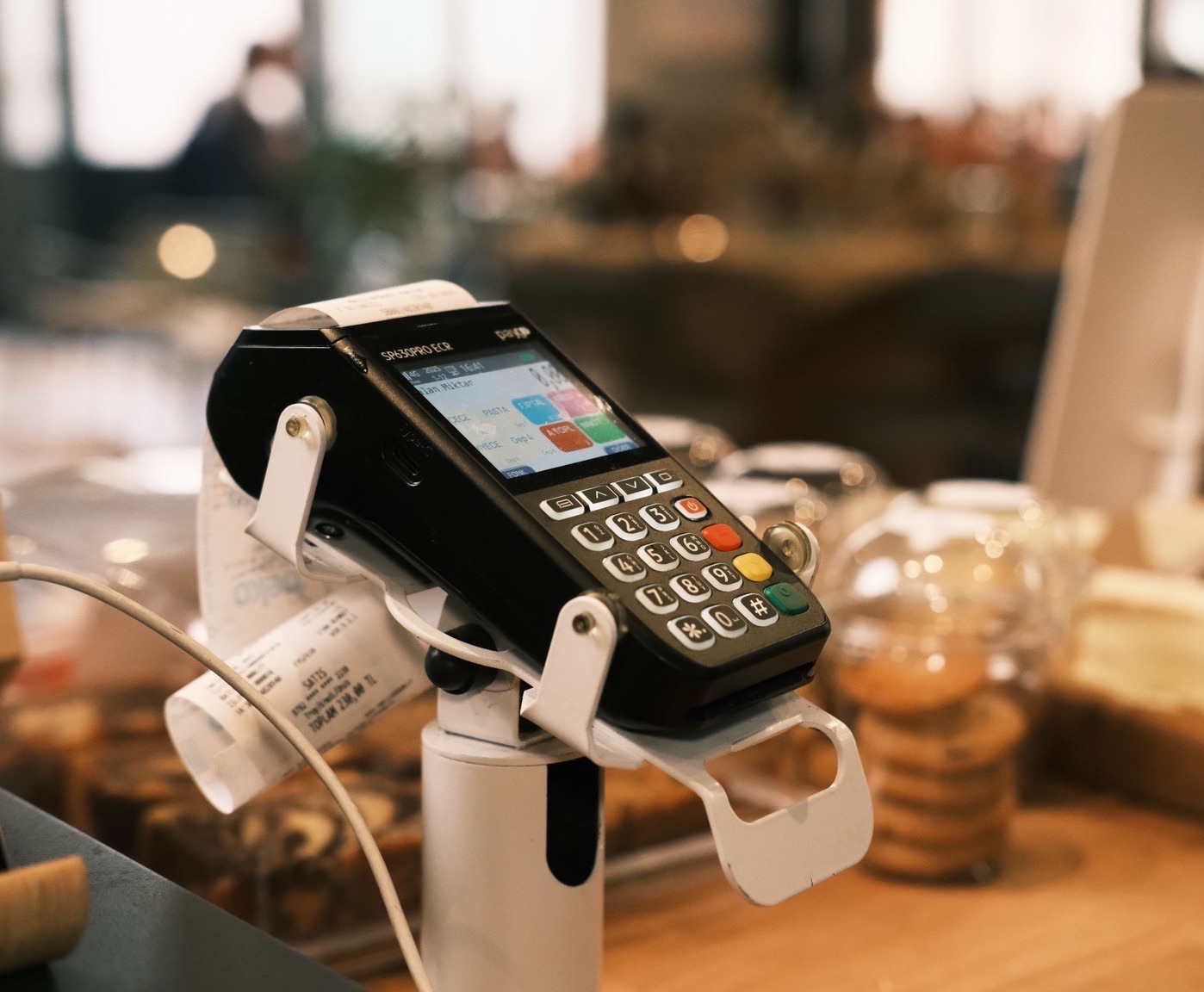
Restaurant technology has taken the wait out of two moments. At the table, a QR code lets guests order and pay without flagging down a server. At the counter, a kiosk absorbs part of the line. One place is left where customers still wait, and where your team drops everything to answer: the phone.
And the phone isn't going away: 63% of Americans say calling is their preferred way to contact a restaurant [1]. Here's a tour of the tools, moment by moment, what their makers promise, and how to bring the same no-wait experience to the call, with nothing for your customers to install.
What does restaurant technology actually cover?
The term covers very different tools: QR code ordering and payment, self-order kiosks, a modern POS, online ordering. The simplest way to sort them is by moment of the meal, and by the wait each one removes. Sunday, which sells QR code payment, puts it plainly: “Waiting for your order is exciting, but waiting for your check isn't” [4].
| Moment | The wait it removes | Examples, and what the maker promises |
|---|---|---|
| At the table | Waiting for the server to order, then for the check | Sunday: “10 seconds to pay, leave a tip, leave a review, and get a receipt” [4]. Lightspeed, for its handheld POS: “speed up orders and payment” [7]. |
| At the counter | The line at the register | Toast, for its kiosks: guests “place and pay for orders themselves, helping to expedite lines and services” [6]. |
| On the phone | The endless ringing, the “please hold” | Often whoever is at the oven or the register, who stops to pick up. |
Toast's tagline for QR code ordering sums up the whole category: “More orders, less waiting” [5]. Each tool gives guests back a moment they used to wait through, and takes a task off your team: bringing the check, running the card, taking the order at the register. For kiosks, we looked closely at what they do to the average order: do self-order kiosks really grow the basket?
Where do your customers still wait?
On the phone. Picture a Friday at 8 pm: the oven is full, three people are waiting at the counter, the phone rings. Whoever picks up makes the people in front of them wait. Whoever lets it ring makes the caller wait. Either way, someone waits.
For the customer, it's exactly the wait the dining room got rid of: the ringing that goes on, the “please hold,” the voicemail. And it's common: 1 in 5 Americans (20%) say their calls to restaurants are always or often ignored [1]. For your team, it's the task the kiosk took away: stopping to write down an order, often on a scrap of paper, over the noise.
When nobody answers, the order goes somewhere else. You can work out what that costs with your own numbers in what a missed call really costs a restaurant.
For a pizzeria, a sandwich shop or a quick-service spot, this moment often matters more than the table. When you live off takeout and delivery, there's often no dining room to turn: what counts is taking the order, at the counter, online or on the phone.
Will QR codes replace phone orders?
Not anytime soon. US surveys all point the same way:
- Customers still prefer to call. In a Harris Poll survey of 2,065 US adults for Hostie, run May 29 to June 2, 2025, 63% said calling is their preferred way to contact a restaurant [1]. That's stated preference, not order data, but it's a clear majority.
- For pizza, the phone comes first. Among US adults who order pizza at least a few times a year, 39% order directly by calling the restaurant, 34% through the restaurant's website and only 8% through a third-party app like DoorDash or Uber Eats (CivicScience, 2023) [2].
- Not everyone carries a smartphone. 91% of US adults own one, but that drops to 79% among those 65 and older (Pew Research Center, survey run January 30 to June 18, 2026) [3]. About one in five Americans 65 and older has no smartphone to scan a QR code with.
QR codes and kiosks serve guests who are already there. A caller has nothing to scan: they just talk. And a phone order pays no app commission; the math is in phone orders vs. DoorDash: what your pizzeria keeps.
How do you automate phone orders at a restaurant?
Upgrading the phone doesn't mean pushing callers to an app. They keep doing what they do: they call. What changes is what happens behind the call. A good setup does five things:
- Answer when your team can't: during the rush, during prep, after closing.
- Take the order from your menu, with options, extras and special requests, without inventing an item or a price.
- Read the order back to the caller before confirming it.
- For delivery, check the address and the zone before saying yes.
- Send the order to the kitchen with no retyping: a printed ticket, an alert to the restaurant.
There are three ways to get there:
- Someone on the phone during the rush. It works, but it's an extra paycheck right when every pair of hands counts, and the order is still written by hand.
- Call forwarding to a cell phone. The call gets answered, but by someone who is busy with something else, and nothing reaches the kitchen on its own.
- An AI voice agent. It answers, takes the order and sends it to the kitchen; the customer installs nothing. That's what Soleir, which answers restaurant phones, does.
Before you choose, count your calls for one week at the hours when nobody can pick up: that number tells you whether the solution pays for itself.
What does an AI voice agent do on a restaurant's phone?
Take Soleir. It's an AI voice agent built for pizzerias, sandwich shops and quick-service restaurants: it answers when your team can't and takes takeout and delivery orders over the phone, in English and in French. In practice:
- it takes the order from your menu, with options and extras, then reads it back to the caller;
- if a detail isn't clear, it texts the customer a Live Ticket: the order already filled in, to check and confirm;
- it can suggest a drink or a dessert, once, if you want it to (it's set restaurant by restaurant);
- for delivery, it checks the address and the zone before confirming;
- the order reaches the restaurant: a ticket printed in the kitchen, plus a text and an email alert;
- it answers customers' questions, 24/7;
- no commission on your orders.
Coming soon: recognizing your regulars, taking table reservations and connecting to your POS.
Your customers have nothing to download or scan: they call, like before. An AI voice agent adds to your table and counter tools, it doesn't replace them: it takes care of the customer who hasn't arrived yet.
Sources
- The Harris Poll for Hostie, “Missed Connection? Over Two-Thirds of Americans Would Ditch Restaurants That Don’t Answer the Phone”, July 27, 2025. hostie.ai
- CivicScience, “Demand for Pizza Delivery on the Decline, Plus More Pizza Industry Insights”, May 22, 2023. civicscience.com
- Pew Research Center, “Mobile Fact Sheet”, October 19, 2026. pewresearch.org
- Sunday, “Digital Bill: QR Code Payment for Restaurants”, accessed October 20, 2026. sundayapp.com
- Toast, “Toast Mobile Order & Pay for Restaurants”, accessed October 20, 2026. pos.toasttab.com
- Toast, “Restaurant Self-Ordering Kiosks”, accessed October 20, 2026. pos.toasttab.com
- Lightspeed, “Restaurant POS System”, accessed October 20, 2026. lightspeedhq.com
Sources checked on October 20, 2026.
Common Questions
Digital tools that take waiting and busywork out of each moment of the meal: QR codes to order and pay at the table, self-order kiosks at the counter, a modern POS, online ordering. The phone often gets left out. An AI voice agent can answer when your team can't, take the order and send it to the kitchen, with nothing for the customer to install.
Not anytime soon. In a 2025 Harris Poll survey of US adults, 63% of Americans said calling is their preferred way to contact a restaurant. And according to Pew Research Center (2026), 79% of adults 65 and older own a smartphone, which leaves about one in five without one. QR codes serve guests who are already there; callers want to talk.
Customers keep calling; what changes is what happens behind the call. A good setup answers when your team can't, takes the order from your menu with its options, reads it back, checks the address and delivery zone, then sends a ticket to the kitchen with no retyping. An AI voice agent does all of that without pulling anyone off the line.
No, they cover two different moments. QR codes and kiosks serve guests who are already in the restaurant. An AI voice agent like Soleir serves the customer who calls to order takeout or delivery: it takes the order, reads it back and sends it to the kitchen. Soleir doesn't take payments, and POS connections are coming soon.
Keep reading


Never Miss Another Restaurant Call
Stay updated with the latest Soleir features restaurant AI insights to your inbox.